Landing Pages

CAVA Qualification

Certificate in Assessing Vocational Achievement

When most people hear the word CAVA, they think of Spanish sparkling wine on summer evenings in the sunshine. However, in the world of education, it is known as the Level 3 Certificate in Assessing Vocational Achievement (CAVA), which is regarded as a career-changing course that can open doors into the world of education. 
What is it?

What is it?


The Level 3 CAVA qualification is the most up-to-date assessing course within the education industry. If you hear people referring to the old A1, D32 / 33, or NVQ assessor, then CAVA is all of these things combined. All of these names are simply older assessing courses that have been replaced by the Level 3 CAVA. 
This still doesn't answer the question of what is it? In short, it's the highest standalone assessing qualification in the world of education. This excludes Internal Quality Assurance, which is a separate skill, albeit linked with assessing.
It’s an Ofqual-regulated qualification that sits on the RQF framework. This means it's recognised across the UK and other areas such as the middle east who will often apply professional recognition to the qualification. 
Book Now

What will it enable me to do?

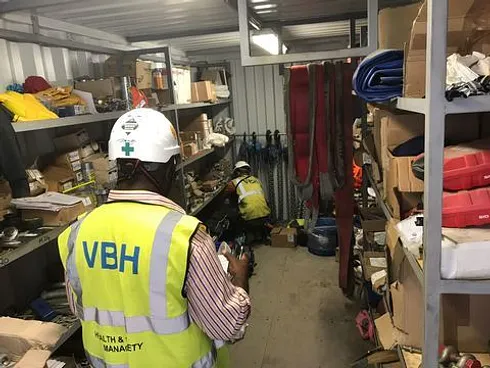
Simplified, the qualification enables you to conduct both workplace and vocational assessments. Real-world examples include a network rail engineer who needs to observe a colleague conducting an electrical test on the railway. Or a teacher in the college who is observing a trainee hairdresser perform a task on the training manikins.
Going forward, there are several avenues in which the qualification can be used. One of those relates to the old saying of “getting off the tools”. The qualification quite literally can help you do that. Again, real-life examples include a bricklayer with injuries who swaps the construction site for the world of teaching and assessing at a local college. Or a hairdresser who is fed up with life in the salon and chooses to set up his / hers own training academy.
These are only examples and can be applied to any of the following industries and many more:
  • Airport security
  • Barbering
  • Beauticians
  • Care worker
  • Customer service
  • Dental nurse
  • Gas fitting 
  • Personal trainers

It's also suitable for anyone who wants to expand their current skill set within their job role. This means they might not want to completely “down tools,” but instead add variety to their work, potentially helping colleagues and trainees. This way of snaking up the career ladder is a good way to earn promotions and to test the waters to find out if education is the sector for you.

What does the qualification entail?

So if this all sounds pretty good, then no doubt you want to know what you can expect to study. The Level 3 CAVA qualification starts with a theoretical unit on understanding the principles and practices of assessment. You can expect to write around 3000 words in this opening assignment. 
Once unit 1 is complete, the candidate assessor moves on to the two practical units. Unit 2 is a workplace unit which consists of x8 practical assessments on two work colleagues. Therefore, you will complete four assessments on each work colleague.
Unit 3 is a vocational unit which consists of x8 practical assessments on two work colleagues. Therefore, you will complete four assessments on either a student or a work colleague. A really common question is, "I don't have the students, so I can't sign up?” This is certainly not the case, as you can use work colleagues for the vocational unit. They just need to be engaged in training tasks whilst they are not working in their role. 
Below is a full breakdown of the units and the credits that they offer:

Highfield Level 3 Award in Understanding the Principles and Practices of 

Assessment (RQF) 

Credit value: 3

Highfield Level 3 Award in Assessing Competence in the Work Environment (RQF)

Credit value: 9

Highfield Level 3 Award in Assessing Vocationally Related Achievement (RQF) 

Credit Value: 9

The qualification has 84 guided learning hours with a total qualification time of 150 hours

See the full course information

How long does the qualification last?

The good news is that the qualification is part of the lifelong learning sector and does not need to be renewed. The only exception would be major structural changes in education, which are not presently on the horizon. 
This is why some organisations still accept older A1, D32/33 qualifications; however, many companies are increasingly looking for their workforce to be adept at the latest assessment methods and may make the L3 CAVA mandatory. Current workers who hold the older qualification often have the opportunity to upskill to the latest qualification during their roles.
In summary, you can complete this short course in 6 weeks to 2 months on average when completing it alongside a full-time job. By its conclusion, you will have a nationally accredited qualification, which can be used to gain promotions within your existing job role or to change your career by working in a college or training academy.

Did you know - An example of a workplace assessment is an observation of a work colleague completing a working task. On the flip side, an example of a vocational assessment could be marking written questions against grading criteria set by the awarding body.

Recommended courses

Assessing

Level 3 Award in Assessing Competence in the Work Environment (ACWE)

The Level 3 Award in Assessing Competence in the Work Environment gives learners the knowledge and skills to accurately assess employees' competence in the workplace.The course has two units:  U...

Find out more

Assessing

Level 3 Certificate in Assessing Vocational Achievement (CAVA)

The Level 3 Certificate in Assessing Vocational Achievement (previously A1) equips learners with the skills to accurately assess candidates' competence.The course has three units:1.  Understandi...

Find out more

Assessing

Level 3 Award in Assessing Vocationally Related Achievement (AVRA)

The Level 3 Award in Assessing Vocationally Related Achievement focuses on assessing in an educational or training environment.The course has two units:1.  Understanding the principles and pract...

Find out more